Pages

.

Showing posts with label Pearl jewelry. Show all posts

Diamond Cuts

It is said that the true worth of a diamond is determined by its clarity, cut, carat and color. Generally, people evaluate the worth of their money by diamond’s color and size but they are really naïve about its cut. In fact, the cut of a diamond is a major factor in establishing its price.

The cut in a diamond is really important as a small mistake in cut can ruin the whole piece so, it should be done intelligently and carefully that enhances the look and beauty of the piece. Therefore, it totally depends upon the expertise and magic of cutter’s hand in shaping up the raw stone into the refined glittering gem that lays its impact on its wearer for forever.

Diamonds are available in different shapes such as round, oval, marquise, pear, heart, emerald pieces and radiant that distinguishes diamonds according to its varieties.  So, it’s really tough for a cutter to bring a life in diamond from a dull stone to a dazzling sparkling gem that is cherished by its wearers. For making a diamond alive certain principles have to be keeping in mind, let’s know them in brief:

Depth:
Depth of a diamond is important in giving an accurate angle to the raw piece that further divert the internal lights of the stone from upside, bottom, sides and corners. If it is done poorly, the radiance of the diamond gets lost and restricts its real glow and charm so, the depth is always considered sharply.

Symmetry:
Symmetry refers to perfect alignment of diamond’s facets; it satisfies the eye and enhances the brilliance and glow of the diamond. A diamond will look dull and when done improperly and misaligned.

Polish:
Polish means smoothness of the surface of the diamond that brings real glow in the diamond. With the invention of new techniques of polish, it has become very easy to bring out the glitter of the piece and refinement as lights easily enters into it and passes easily and effortlessly.

So, a true diamond is not only based on its clarity, weight and color but its cut is also a major factor in deciding its brilliance and shine that people just ignore while buying. For us, its brilliance and glow is the reasons for its high cost that takes our heart easily. But, it’s the fact that the radiance of the diamond depends highly on its cut.
reade more... Résuméabuiyad

Tips to buy Graduation Gifts

“The only real failure in life is one not learned from.”
Anthony J. D'Angelo, The College Blue Book

Ah, graduation. A lot of hard work, time, talent, money and drive have led to this point: a milestone that will be celebrated, photographed and remembered forever. Whether from high school, college, law school, medical school, or what have you, graduation is a wonderful time of excitement and change.

How to mark the occasion? You can always write a check. (What new graduate doesn’t need money?) Before you whip out your wallet, however, remember that cash is practical, yet very impersonal. Because you’re reading this, it’s a good guess that the graduate is a special woman in your life, she worked hard to get where she is, and she deserves a graduation gift that is truly memorable.

How about something memorable, practical, meaningful and beautiful? Try pearls.

Pearl jewelry—whether pearl studs, a pearl pendant or a beautiful pearl strand—is a classic and wonderful addition to any woman’s jewelry box. Whether she’s heading off to college, interviewing for jobs, about to embark on a career, or planning a wedding, the recent graduate can wear pearl jewelry for instant polish. Added bonus: She’ll remember you every time she wears them.

Which pearls to choose
Pearls come in many beautiful styles, shapes and designs, but for graduation, a simple classic style that will stand the test of time is best. (They don’t call them staples for nothing.) Because classic pearls are so popular, there are a variety of options from which to choose. The following are classics she’ll reach for again and again.

• Pearl stud earrings: The great thing about pearl studs is that they go with everything. Round, white pearls with a rosé overtone flatter most skin types, and make a wonderful addition to any jewelry box. Some stores even carry pearl studs for non-pierced ears.
• 16 inch pearl strand: A matched pearl strand is a jewelry staple for a reason: it’s a classic—not to mention a no-brainer accessory that a woman can reach for to instantly add polish to an outfit. Shorter strands worn closer to the throat draw attention to the wearer’s face and skin; with their dewy complexions, young women look fantastic in pearl chokers. This style sits close to the throat and looks great with a business suit, v-neck sweater, tee-shirt or open-collared dress shirt.
• 18 inch pearl strand: This slightly more versatile, “princess” length necklace can be worn with most any neckline, and will serve the graduate well throughout her life. The princess length is a very popular choice for a great reason: it works well with everything from turtlenecks to sweaters, business suits, dress shirts, and more.
• pearl pendant: A pearl pendant necklace featuring a single, large pearl is a great option that can be worn with many different styles. Choose a thin sterling silver or white gold chain for a modern look.
• pearl bracelet: A perfect complement to a bold watch, and slightly more affordable than a pearl necklace, a pearl bracelet adds polish and class.
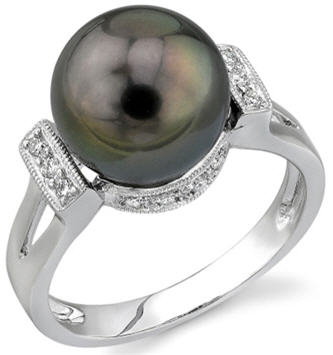
• pearl ring: A pearl ring can make quite a bold and sophisticated statement, especially when the ring features a single, large pearl. The only downside to buying a ring is that you need to know the graduate’s ring size. Classic pearl rings look fantastic with both white and yellow gold.

Many retailers and online stores sell classic pearl jewelry in sets. Not only is this great because you pay less for the set than if you purchased a necklace, earrings and bracelet separately, but buying a pearl jewelry set provides the added bonus that the pieces will match.

What to look for
No matter which style you choose, or whether you buy pearls from a local jewelry store, large retail chain or Internet store (which should offer adequate descriptions of what you’re buying along with a money-back guarantee), keep in mind these tips when you’re shopping for pearls and you won’t go wrong:
• You’ll pay more for larger pearls. In general, a larger pearl takes longer to form, and the chances of finding a perfectly round, large pearl are slim. After the 7.5-8mm mark for freshwater cultured pearls and akoya cultured pearls, the most popular pearl types, prices rise dramatically. A 6.5mm strand is both lovely and affordable—and perfect for young women.
• Pay attention to luster and surface. Pearls should have a high luster, or surface sheen, meaning they reflect light well. They should also be free from large blemishes such as chips and pits, although small blemishes are acceptable. An absolutely perfect strand is likely faux. Pearls are, after all, a natural product, and small variations are to be expected and do not detract from the pearls’ value.
• Round is the hands-down favorite shape. While baroque pearls are gorgeous, and button and coin pearls are modern and affordable, when it comes to classic pearls, round is still in. To check that pearls are uniformly round, ask the jeweler or read the Internet description. If you can handle the strand, roll it on a table. Matched pearls will roll smoothly.
• Thickness is important. Most pearls sold today are cultured pearls, and the best ones are formed in oysters or mussels that have been implanted with small, mother-of-pearl beads and mantle tissue or mantle tissue only and left in the water long enough for a sufficient coating of nacre to form. Avoid pearls that have been implanted with large plastic or glass beads or harvested prematurely; they will flake and peel easily.
• Pay attention to uniformity. Make sure that pearls in a piece of jewelry are the same size, color, shape and luster.
• Beware: Some jewelry makers try to hide smaller or imperfect pearls near the clasp.
• Choose color carefully. Pearls look best if they flatter the skin tone of the wearer.

Follow these pearl-buying tips, choose wisely, and your graduate will have a jewelry staple she’ll treasure forever.
reade more... Résuméabuiyad

Pearl jewelry gemstones Pearl

Pearl jewelry Gemstones Pearl
Pearl symbolizes love, success, and happiness.
Color: The color of pearls varies with the mollusk and its environment. It ranges from black to white, with the rose of Indian pearls esteemed most. Other colors are cream, gray, blue, yellow, lavender, green, and mauve. All occur in delicate shades.
Cultured pearls are being produced in virtually every color of the rainbow.
Description: The chief component of the nacre that constitutes the pearl is aragonite CaCO. Pearls are formed by a mollusk consisting of the same material (called nacre, or mother-of-pearl) as the mollusk's shell. It is a highly valued gemstone.
The shell-secreting cells of the mollusk are located in the mantleof its body. When a foreign particle penetrates the mantle, the cells attach to the particle and build up more or less concentric layers of pearl around it. Irregularly shaped pearls called baroque pearls are those that have grown in muscular tissue. Pearls that grow adjacent to the shell are often flat on one side and are called blister pearls.
Pearls are characterized by their translucence and lustre and by a delicate play of surface color called orient. The more perfect its shape (spherical or droplike) and the deeper its lustre, the greater its value. Only those pearls produced by mollusks whose shells are lined with mother-of-pearl (e.g., certain species of both saltwater oysters and freshwater clams) are really fine pearls. Pearls from other mollusks are reddish or whitish, porcellaneous, or lacking in pearly lustre.
The surface of a pearl is rough to the touch. Pearls come in a wide range of sizes. Those weighing less than 1/4 grain (1 pearl grain = 50 milligrams = 1/4 carat) are called seed pearls. The largest naturally occurring pearls are the baroque pearls; one such pearl is known to have weighed 1,860 grains.
Cultured pearl is natural but cultivated pearl produced by a mollusk after the intentional introduction of a foreign object inside the creature's shell.
Birthstone: Pearl and cultured pearl along with alexandrite and moonstone are birthstones of Gemini (Twins): May 21 - June 21.
Wedding anniversary: Freshwater Pearl is the anniversary gemstone for the 1st year of marriage;
Pearl is the anniversary gemstone for the 12th and 30th year of marriage.
Varieties: Jewelers commonly refer to saltwater pearls as Oriental pearls and to those produced by freshwater mollusks as freshwater pearls.
Care and treatment: Pearls are less durable than most gems. They are sensitive to acids, dryness, and humidity. If you wear cosmetics, perfume or a hair spray, put these on before wearing your pearl jewelry. When taking off your pearls, wipe them with a dry, lint-free cloth. If needed, clean your pearls with warm soapy water being very careful to not get water into the drill hole as the pearl may discolor. Dry your pearls flat on an absorbant soft (preferably lint-free) towel.
reade more... Résuméabuiyad

What do you think of these solution?

.